When movement becomes structure
Voltworks presents finite bodies of work shaped by pressure, relation, movement and constraint. Across each series, geometry becomes a field in which forces gather, shift and settle into forms capable of holding their tension.
Signal Pressure
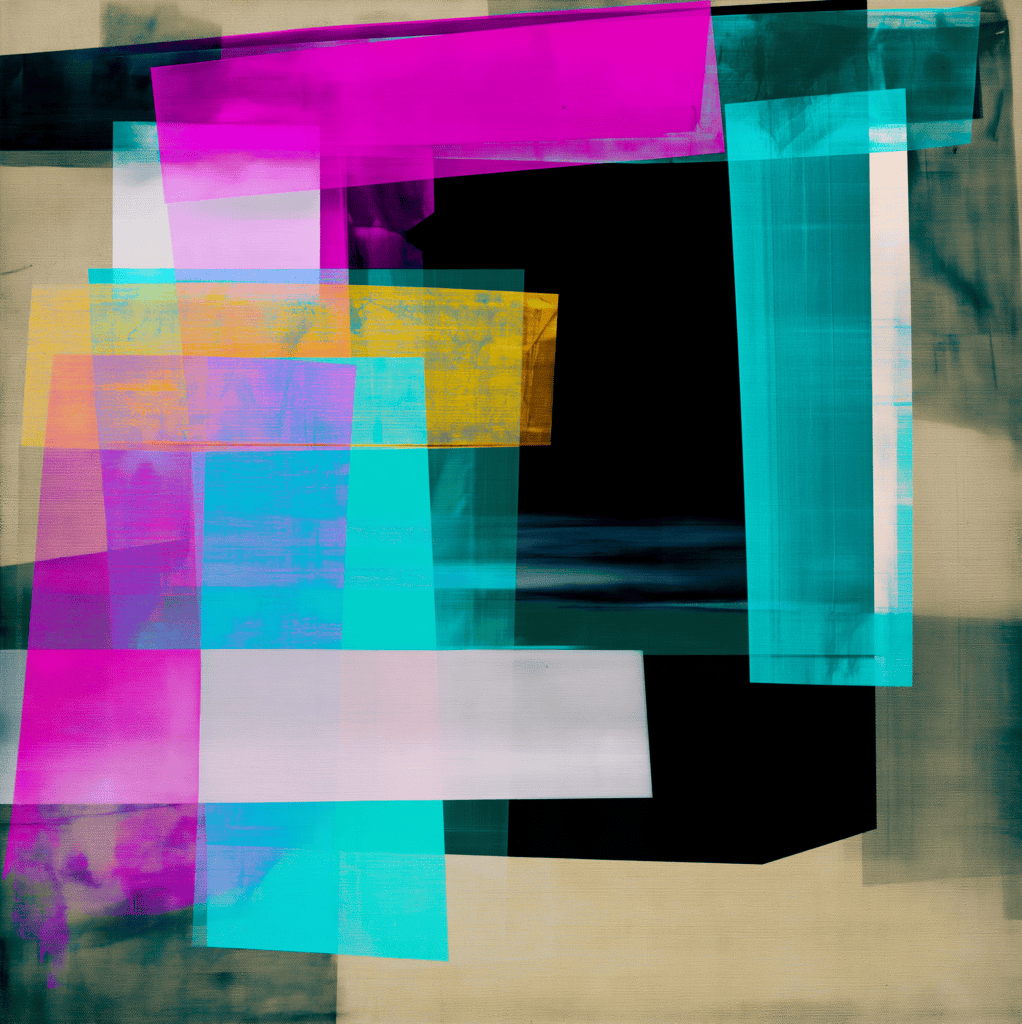
Signal Pressure examines what happens when luminous colour fields encounter constraint. Translucent planes overlap, compress and redirect one another as saturated colour meets dark structural interruption.
Each work begins as a volatile field rather than a fixed composition. Cyan, magenta, yellow, white and black act as unequal forces, creating regions of compression, interference and release. Hard boundaries cut through softer pigment fields while layered surfaces retain the traces of movement, abrasion and partial erasure.
The work becomes complete when this chromatic pressure finds a structure capable of holding it without losing its charge
Each piece remains stable, but never fully settled.
Museum Dark
Museum Dark examines how structure holds under reduced light. Dense fields, muted planes and narrow openings create compositions in which mass, void and pressure remain visible without becoming explicit.
Each work is built through restraint. Deep green, charcoal, umber, slate, limestone and muted gold are arranged as unequal forces, producing areas of compression, suspension and blocked release. Small light events carry disproportionate weight, revealing how little is required to reorganise the whole field.
The work becomes complete when its darker structures settle into a quiet equilibrium without losing the pressure that holds them together.
Each piece remains still, but never passive.
Discover More
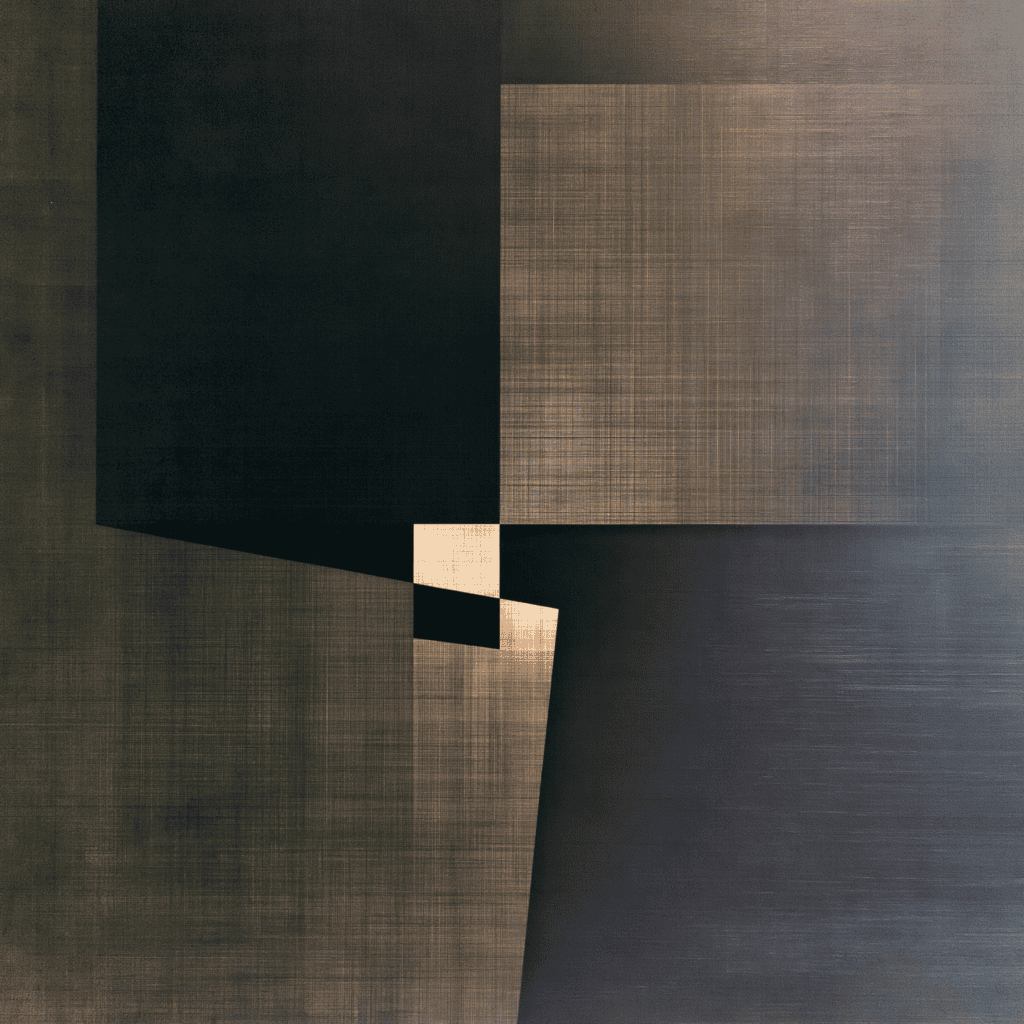
Structural Fields
Structural Fields examines how layered planes, curved trajectories and translucent boundaries reorganise space. Each work develops as a spatial system in which mass, direction, density and openness act upon one another.
Rectilinear structures provide weight and containment. Curved forms pass through them, redirecting attention and altering the apparent depth of the field. Pale surfaces reveal overlap and transition, while darker masses anchor the composition and resist movement.
The work becomes complete when these competing spatial conditions form a coherent structure without becoming fixed or fully resolved.
Each piece holds several possible readings at once: surface and depth, enclosure and passage, stability and drift.
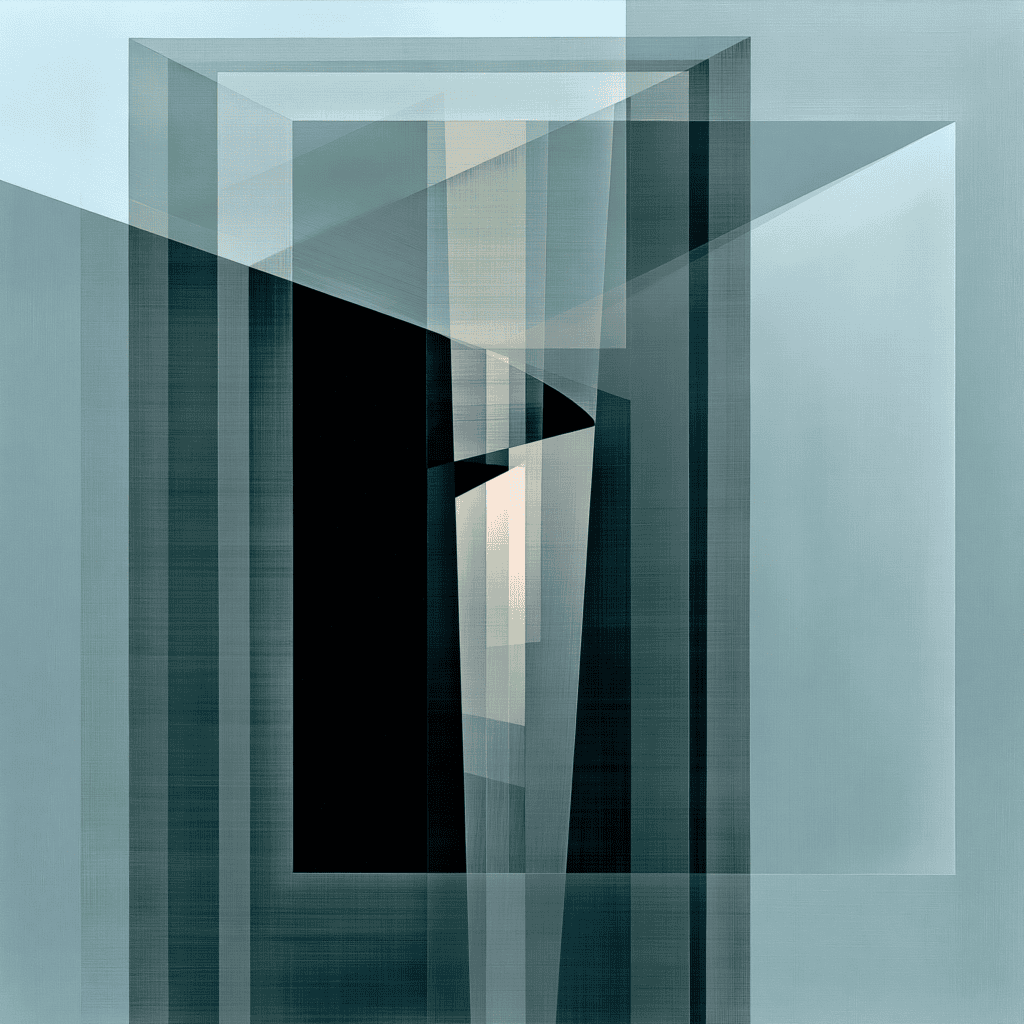
Field Dynamics
Field Dynamics examines how trajectories, forces and boundaries interact across a changing field. Curved structures expand, fold, collide and reorganise as movement becomes temporarily coherent.
Each work brings together several dynamic conditions at once: rotation against drift, convergence against release, density against openness. Fine lines register motion while broader translucent surfaces give that motion weight and volume. A compressed node or structural split concentrates pressure without becoming the sole centre of the image.
The work becomes complete when these competing trajectories hold one another in a stable visual state without losing the energy of movement.
Each piece remains active, even when fully resolved.
Discover More
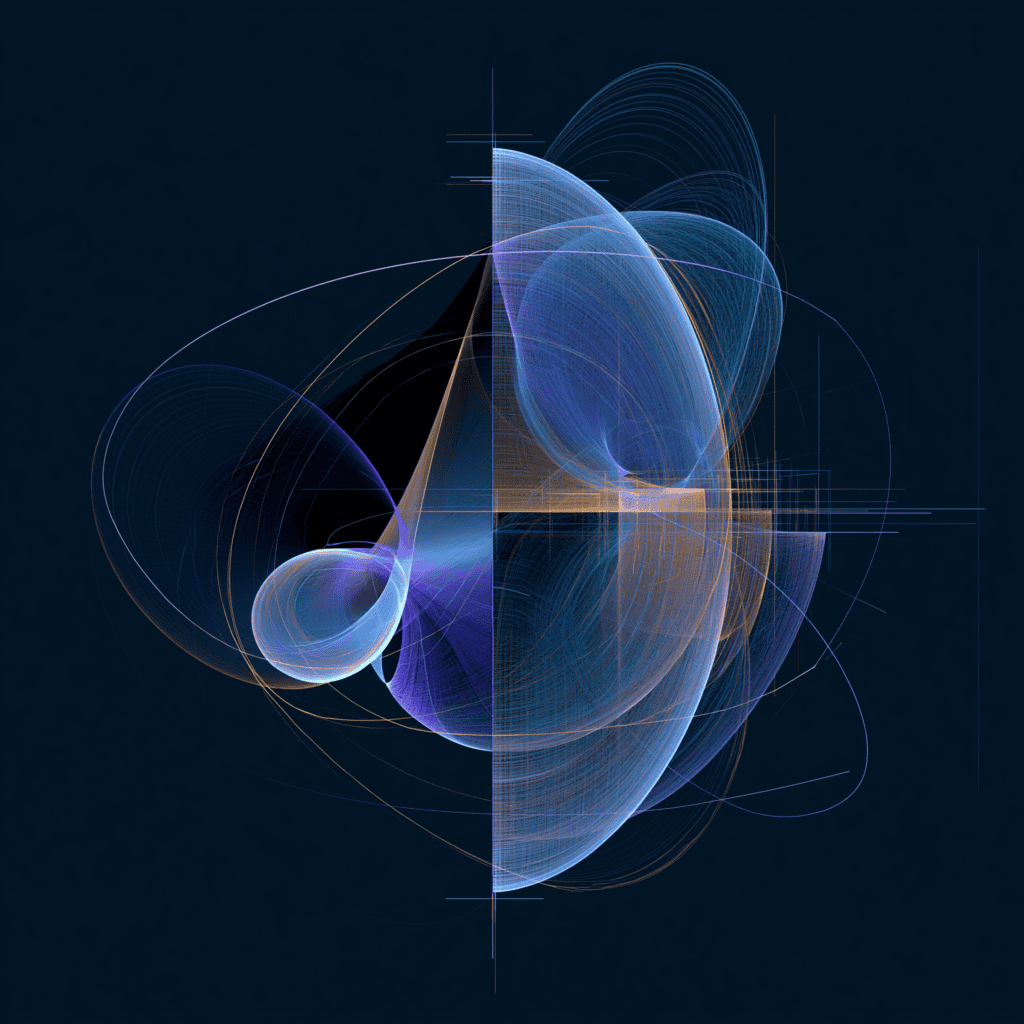
Structural Tension
Structural Tension examines how weight is distributed, transferred and held across a field. Broad beams, narrow supports and overlapping planes create structures that appear stable while retaining the strain required to sustain them.
Each work is organised around a visible load path. Dark masses carry weight across lighter fields, horizontal pressure meets vertical resistance, and small junctions support forces larger than their scale suggests. Stability depends on unequal support rather than balance.
The work becomes complete when these competing loads settle into a coherent structure without losing the pressure moving through it.
Each piece feels constructed, but never fully at rest.
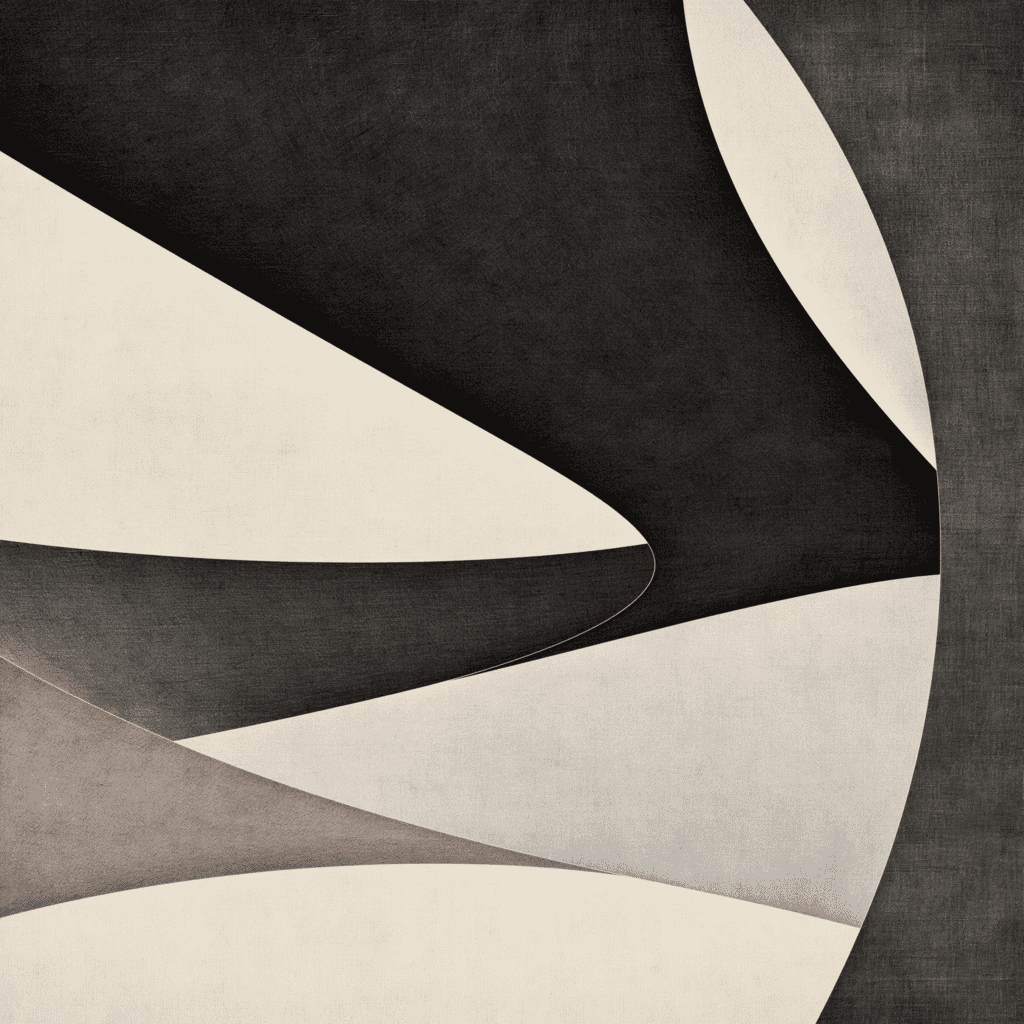
Continuity Field
Continuity Field examines how movement persists across boundaries, interruptions and changes of direction. Translucent surfaces fold through rigid structures while fine trajectories register the paths by which the field remains connected.
Each work is organised around continuity under redirection. Pale forms carry movement across darker regions, passing through compression, overlap and obstruction without fully breaking. Curved and rectilinear systems interpenetrate, creating a field that remains coherent even as its internal paths shift.
The work becomes complete when these repeated redirections form a stable visual structure without closing the movement down.
Each piece feels continuous, but never smooth.
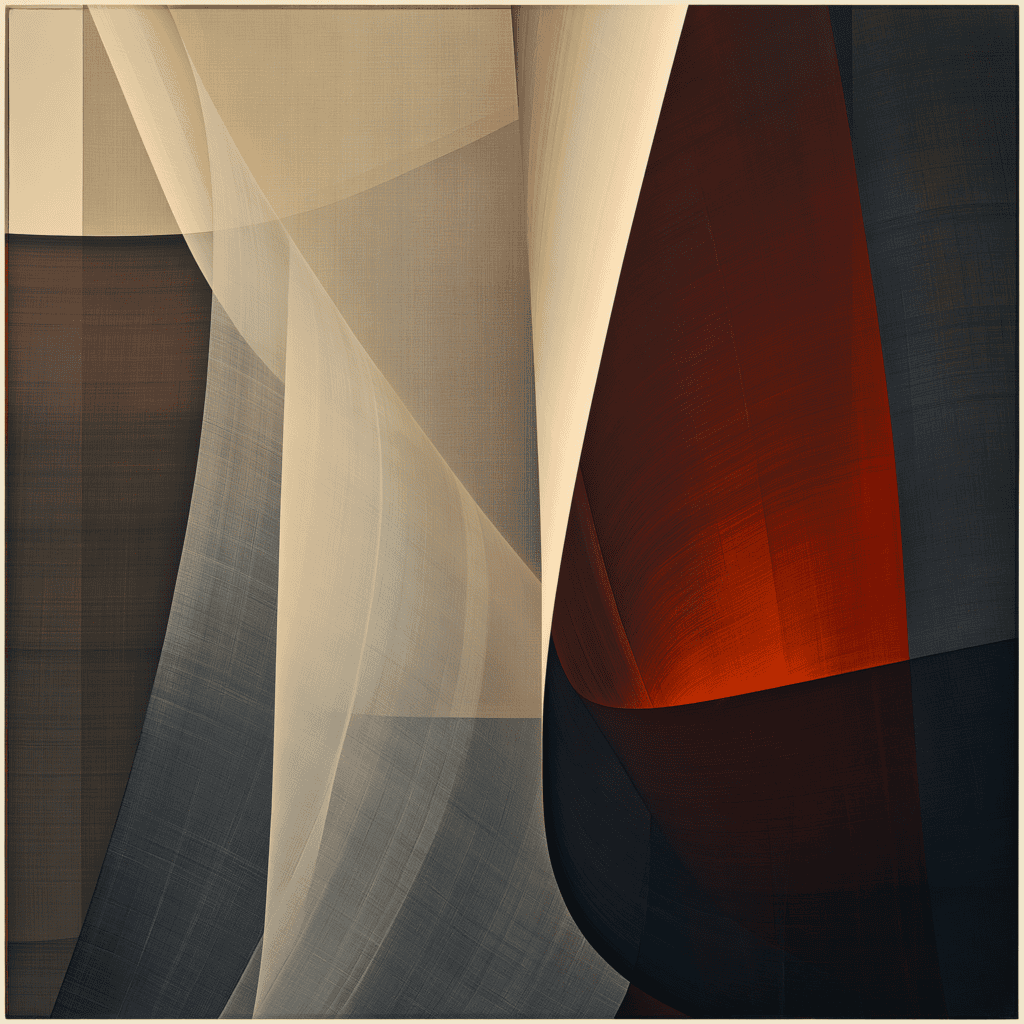
Occluded Field
Occluded Field examines how structure persists when much of it is withheld from view. Overlapping planes, recessed zones and interrupted surfaces create depth through concealment rather than disclosure.
Each work is organised around partial visibility. Dark masses block, compress and redirect the field, while pale fragments reveal only enough structure for the eye to reconstruct what lies behind them. Passage is repeatedly suggested, then interrupted.
The work becomes complete when these concealed relations form a coherent spatial system without resolving into a single reading.
Each piece reveals itself through what it refuses to show.
Discover More
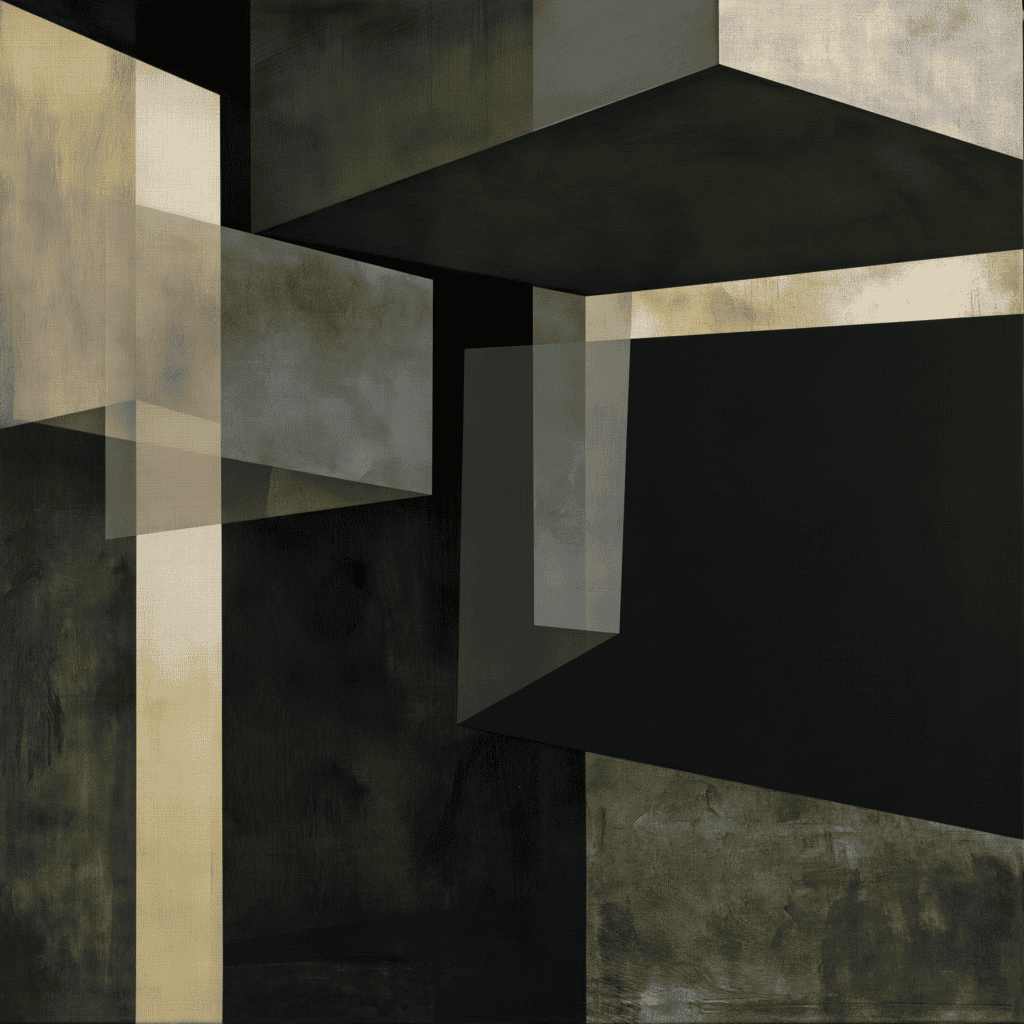
Chromatic Load
Chromatic Load examines how saturated colour can behave as structural weight. Bright planes, dark supports and active white fields form unstable systems in which colour presses, carries and redirects rather than decorates.
Each work is organised around unequal force. Cyan, magenta and yellow occupy different structural roles, while black masses anchor the field and concentrated junctions absorb pressure. Transparency creates compound zones where colour, depth and load become inseparable.
The work becomes complete when these competing chromatic forces settle into a structure capable of holding them without losing their intensity.
Each piece is immediate in colour, but structural in effect.
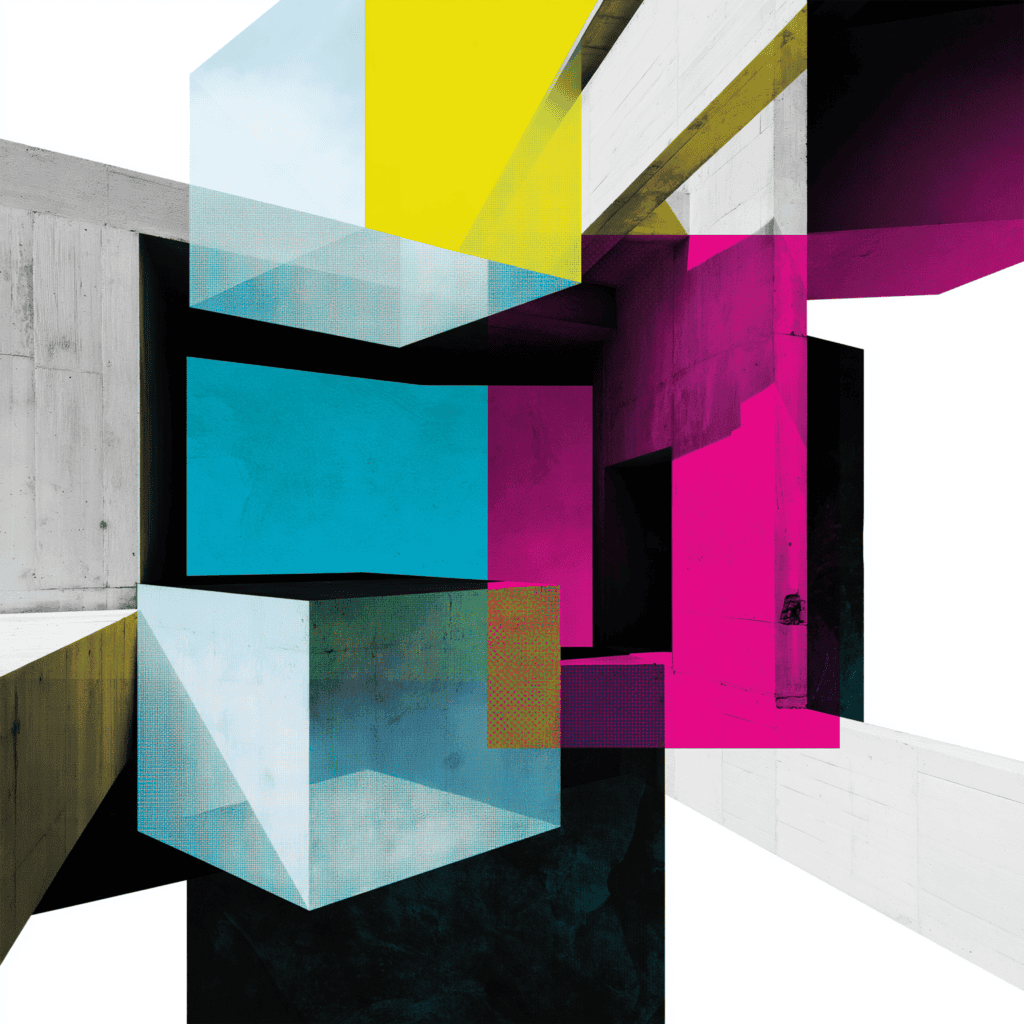
Curvature Drift
Curvature Drift examines how coherent form emerges from continuous movement. Translucent trajectories sweep, fold, tighten and release across a dark field, creating temporary structures without becoming fixed objects.
Each work is organised around the relation between compression and release. Dense turning basins gather pressure while broader arcs carry movement outward, allowing several dynamic conditions to coexist within the same field. Line density creates volume, and residual paths preserve the possibility of further change.
The work becomes complete when these trajectories hold one another in a coherent visual state without losing their directional energy.
Each piece is resolved, but still in motion.
Discover More
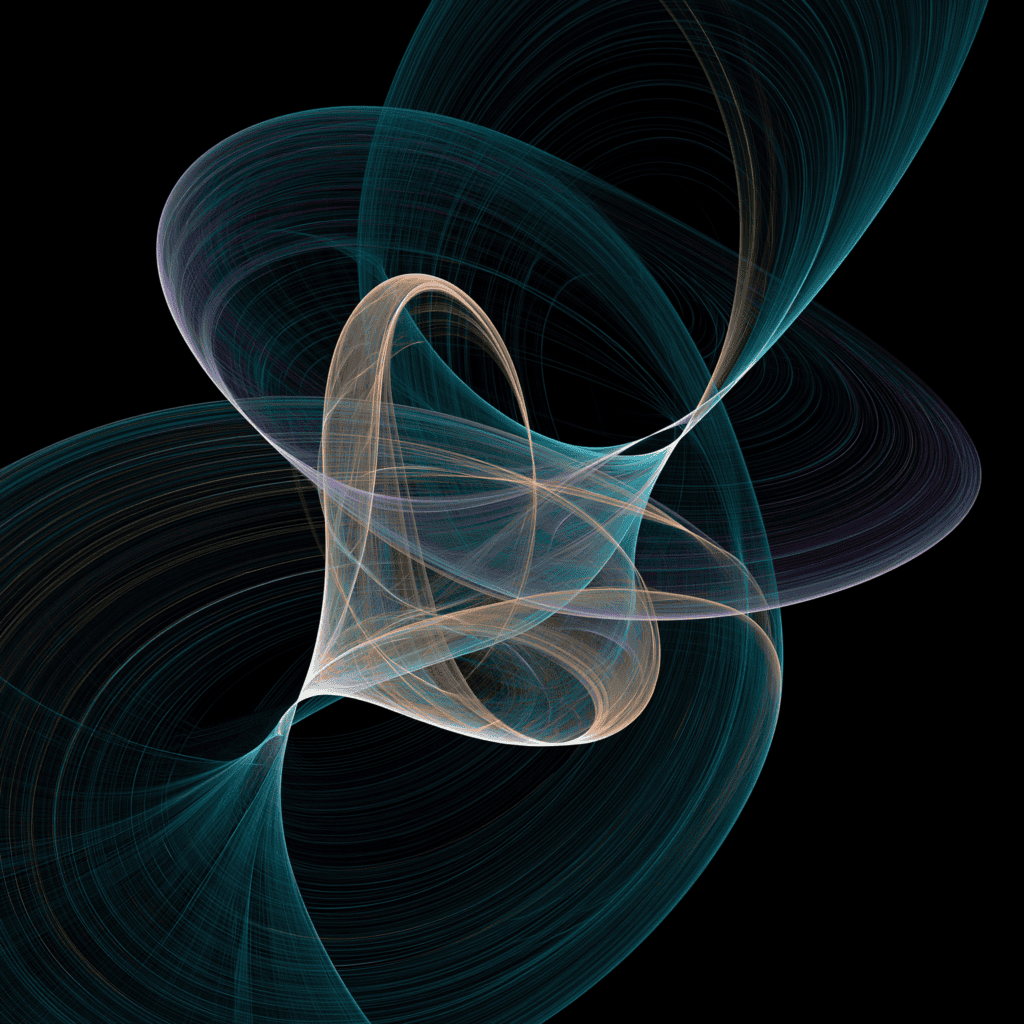
Interlaced Field
Interlaced Field examines how distinct trajectories become structurally dependent without losing their own direction. Curved bands, fine lines and translucent surfaces cross, separate and reconnect across a shared field.
Each work is organised through interlacing rather than enclosure. No single path contains or governs the others. Movement is distributed across several overlapping systems, with crossings forming temporary junctions and open intervals preserving separation.
The work becomes complete when these independent trajectories establish a coherent field without collapsing into one another.
Each piece is connected, but never fused.
Discover More
Settled Field
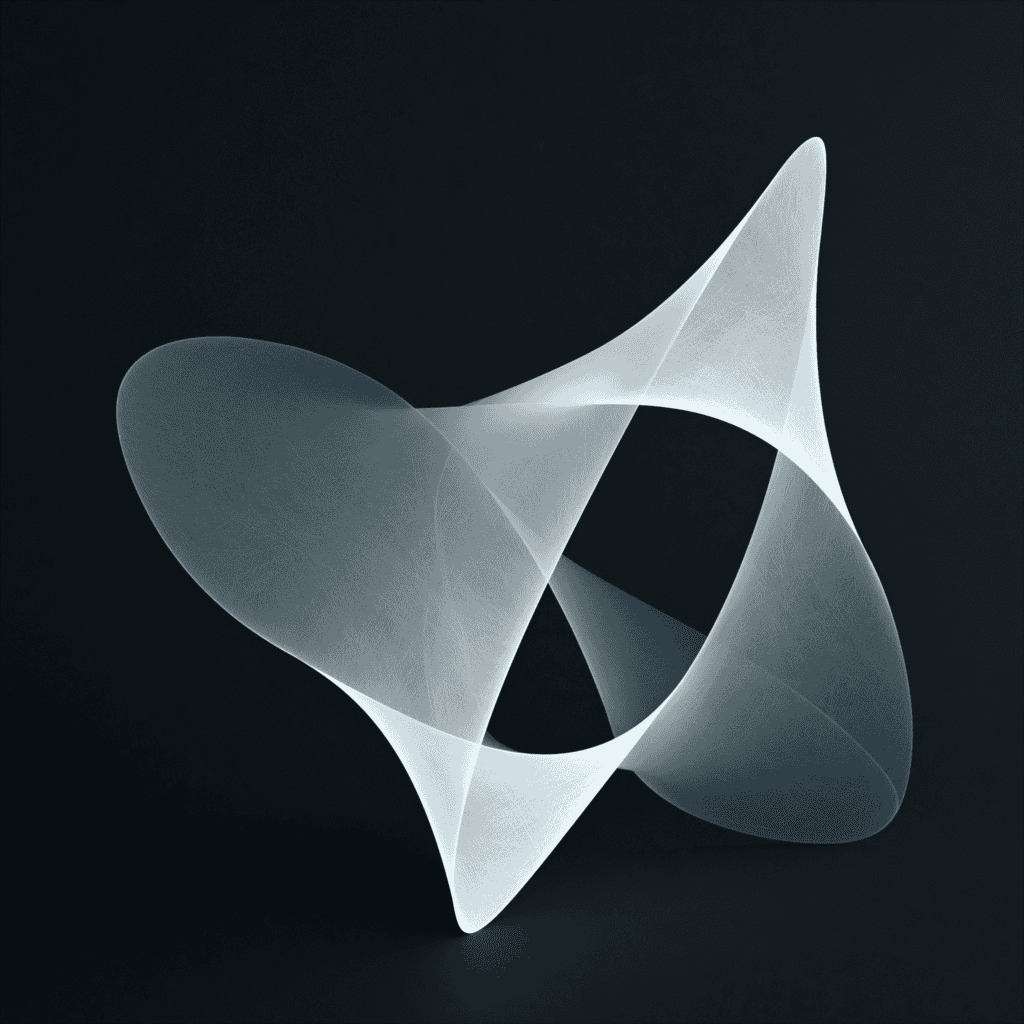
Settled Field examines how colour regions come into relation without losing their difference. Broad translucent planes overlap, soften and adjust across the field, while darker structures provide weight and containment.
Each work is organised through quiet accommodation rather than collision. Muted cyan, magenta, teal, stone and violet gather into unequal but coherent relations, creating compound colours and boundaries that shift between firmness and dissolution.
The work becomes complete when these colour fields settle into a provisional equilibrium without becoming static or fully reconciled.
Each piece feels calm, but never entirely at rest.
Tensile Form
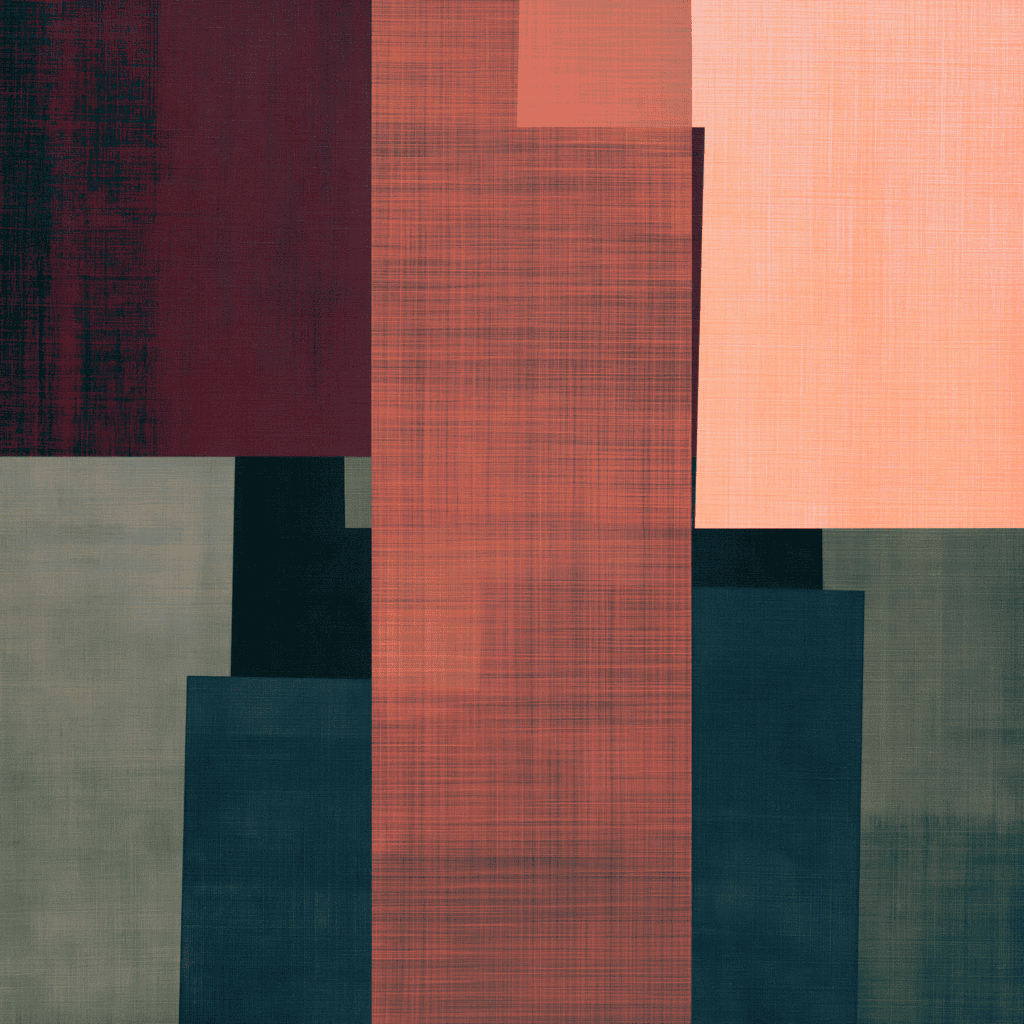
Tensile Form examines how shape emerges through stretch, suspension and opposing pull. Curved surfaces and narrow connections distribute force across the field, allowing structure to remain open while still holding together.
Each work is organised through tension rather than mass. Forms extend, bend and counterbalance one another, with areas of compression giving way to broader zones of release. Stability depends on continuous relation across the whole structure.
The work becomes complete when these opposing pulls settle into a coherent form without losing the strain that sustains it.
Each piece is held together by the forces acting through it.
Depth Register
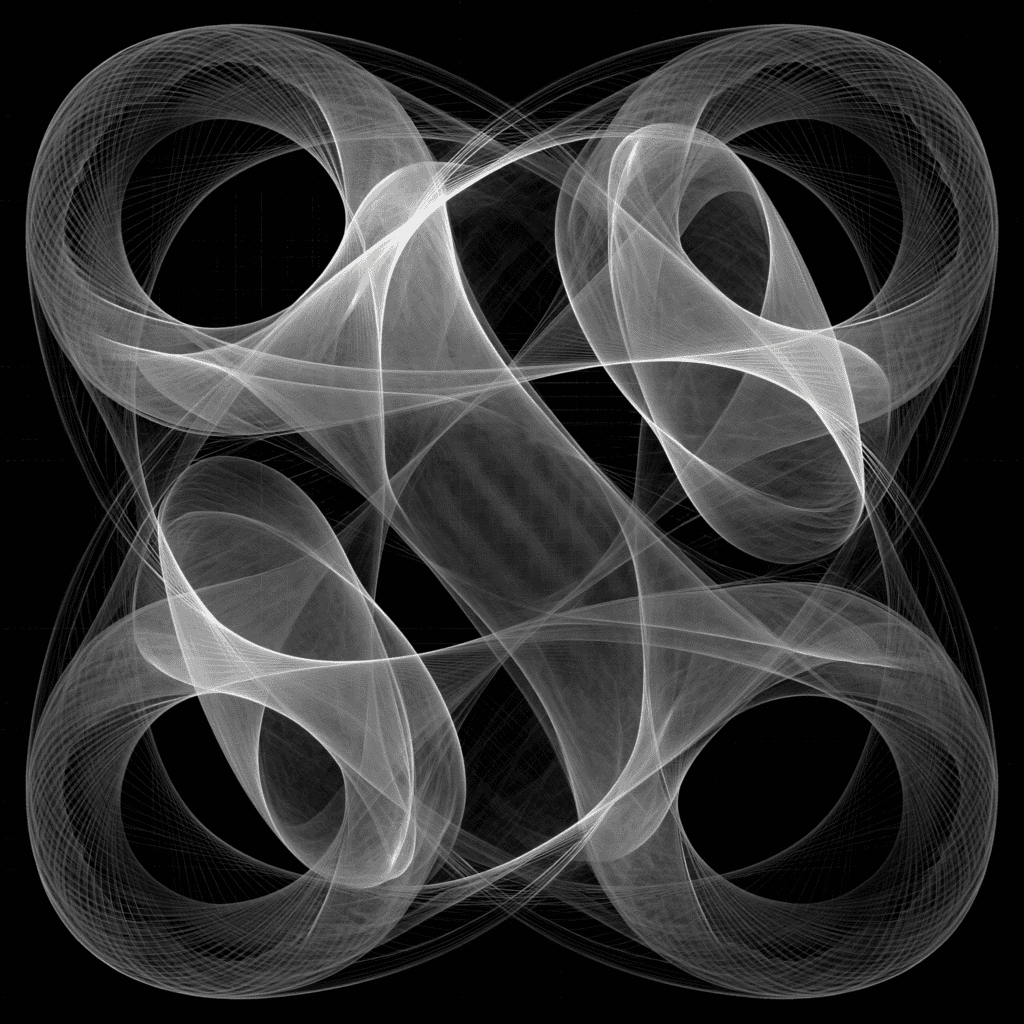
Depth Register examines how layered planes record shifts in distance, weight and visibility across a field. Overlapping structures move between surface and recession, allowing depth to emerge through partial concealment rather than fixed perspective.
Each work is organised through spatial registration. Pale planes reveal one level while darker masses suppress another, creating intervals in which near and far remain unstable. Boundaries act as evidence of changing depth, not as simple divisions.
The work becomes complete when these layered conditions form a coherent spatial order without resolving into a single viewpoint.
Each piece holds several depths at once.
Discover More
Load Path
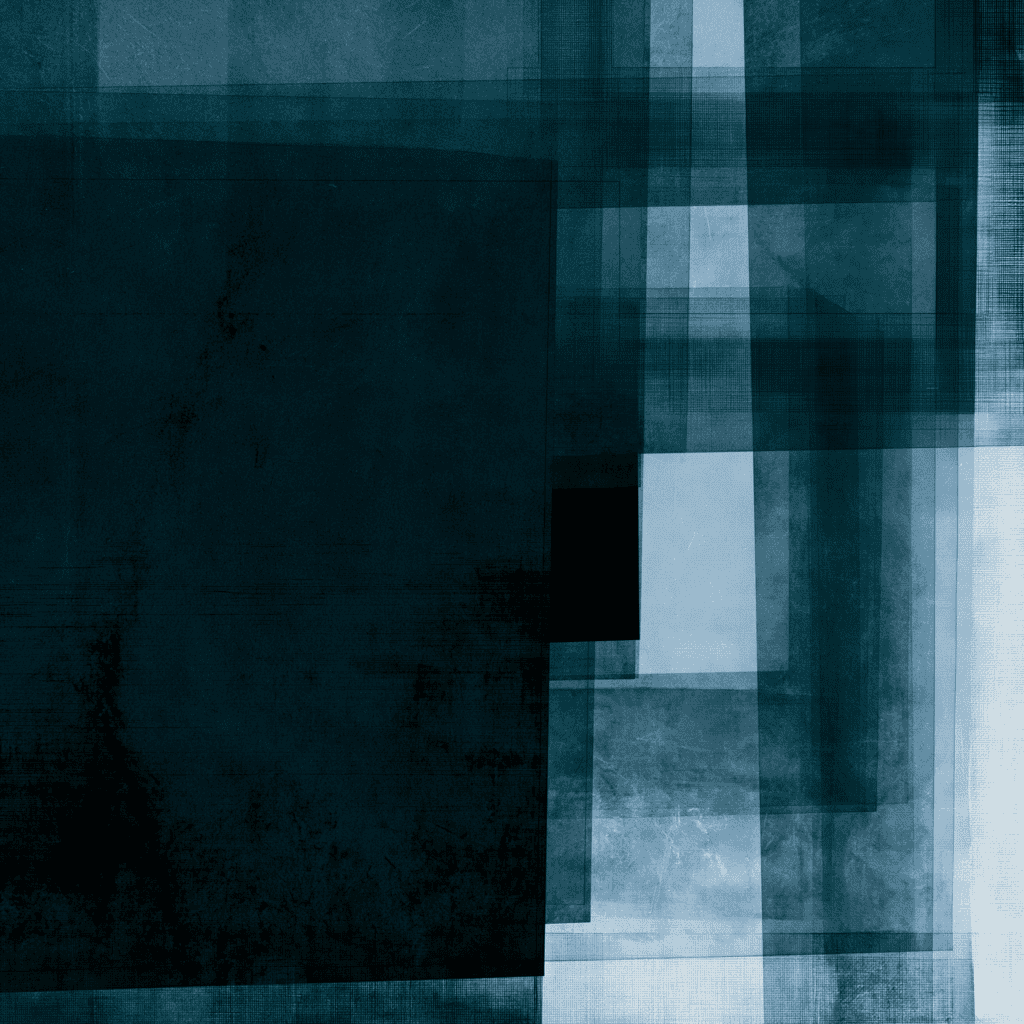
Load Path examines how pressure moves through a field. Dark channels, angled planes and narrow junctions carry, redirect or absorb force, allowing structure to emerge through tension rather than representation.
Each work is organised around the relation between applied pressure and structural response. Dense forms concentrate weight while pale fields resist, release or redistribute it. Small colour events mark points of transfer, rupture or change in direction.
The work becomes complete when these forces settle into a coherent arrangement without losing the strain that produced it.
Each piece holds pressure in resolved form.
Interfold
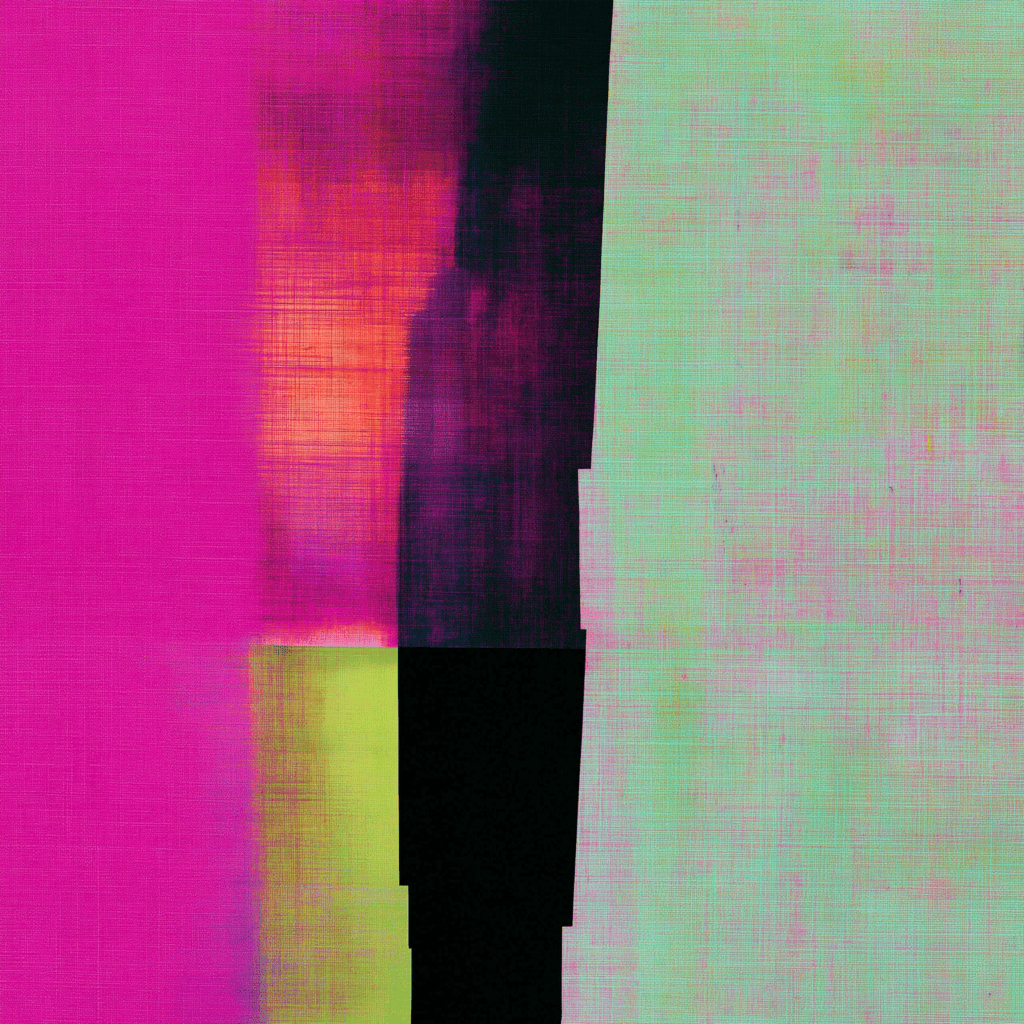
Interfold examines how continuous surfaces change state through folding. Broad planes turn, double back, disappear beneath one another and re-emerge, allowing structure to form through transformed continuity rather than woven connection.
Each work is organised around one or a small number of surfaces passing through successive folds. Occlusion changes what can be seen without breaking the underlying path. Pale forms bend, compress and open while darker regions resist or redirect their movement.
The work becomes complete when these folded passages settle into a coherent field while retaining the trace of every turn.
Each piece holds continuity through transformation.
Discover More
Enclosed Motion
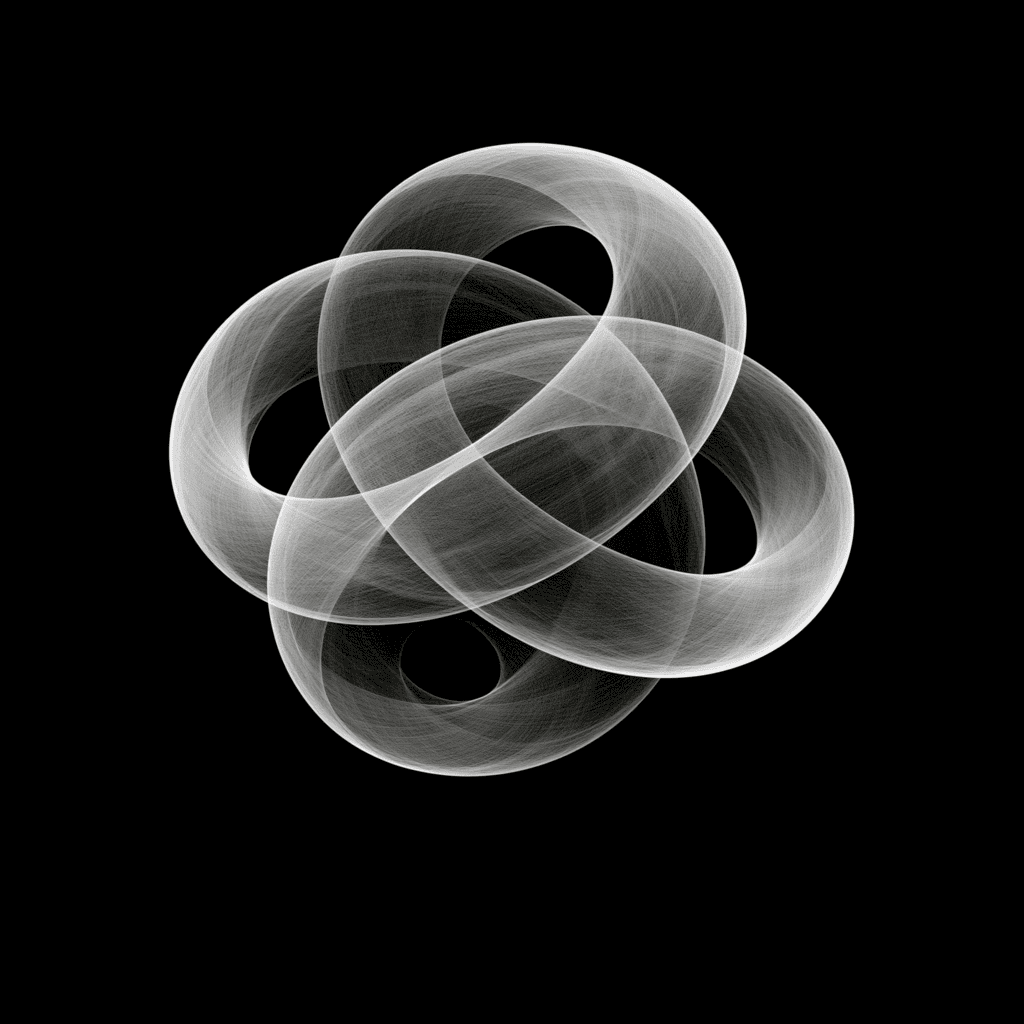
Enclosed Motion examines how continuous trajectories fold back upon themselves to form bounded volumes. Curved line fields loop, narrow, overlap and return until movement begins to hold its own shape.
Each work is organised through circulation rather than mass. Open paths gather into permeable structures that feel internally complete without becoming sealed. Line density creates volume, while repeated crossings and returning arcs preserve the sense of motion continuing within the form.
The work becomes complete when flow finds a boundary capable of containing it without bringing it to rest.
Each piece is a vessel made from movement.